

Every day across India, millions of women wake up, go to work, run homes, raise families – all while silently carrying chronic pelvic pain. Endometriosis alone is estimated to affect around 42 million Indian women, yet diagnosis is often delayed by 7–10 years, with symptoms dismissed as “normal period pain” or stress.
On this Women’s Day “it’s just period pain” can no longer be our national diagnosis.
(Panel discussion on: How to set up interdisciplinary care for
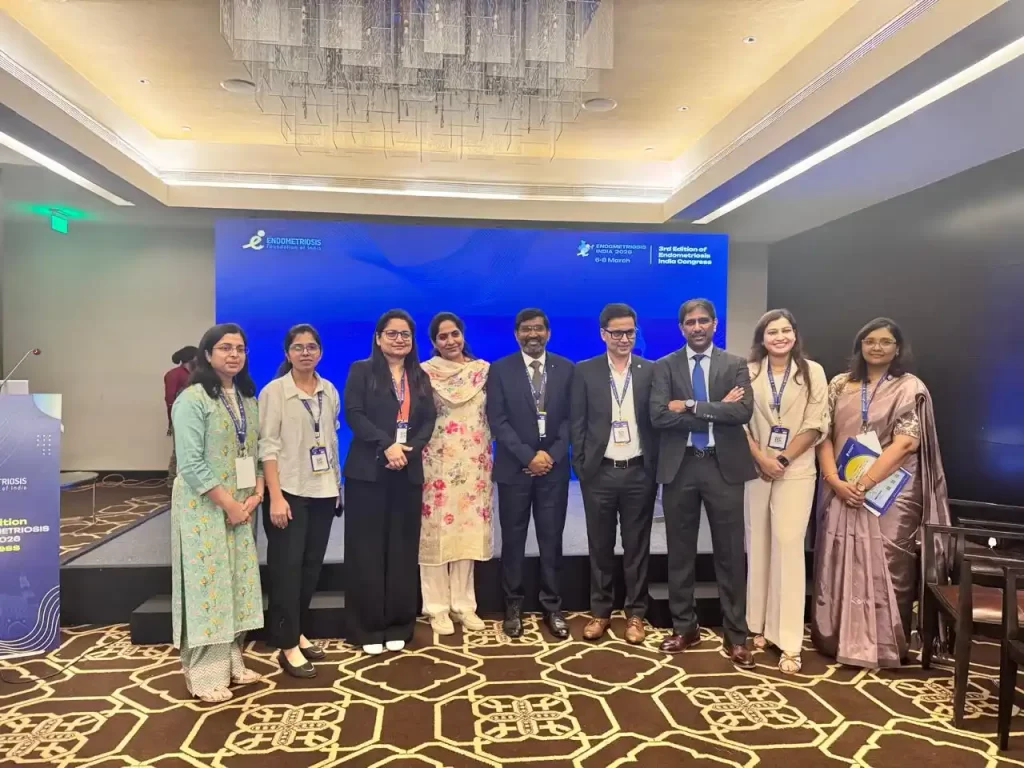
endometriosis in India 2026)
Why Pelvic Pain Needs A Team, Not A Single Doctor
Chronic pelvic pain in women is rarely just a gynaecology problem – it is a complex biopsychosocial condition involving hormones, nerves, muscles, mood, relationships, diet, work and fertility. Many women shuttle between gynaecologists, gastroenterologists, urologists and orthopaedicians without an answer, especially in smaller towns where dedicated pelvic pain or endometriosis specialists simply do not exist.
In India, studies and policy commentary repeatedly highlight a shortage of endometriosis specialists, inadequate infrastructure outside metros, low awareness among general practitioners, and stigma around menstruation – all of which delay diagnosis and treatment. This is exactly why a structured, interdisciplinary pelvic pain team is not a luxury, but a necessity.
Chronic pelvic pain in women is rarely just a gynaecology problem – it is a complex biopsychosocial condition involving hormones, nerves, muscles, mood, relationships, diet, work and fertility. Many women shuttle between gynaecologists, gastroenterologists, urologists and orthopaedicians without an answer, especially in smaller towns where dedicated pelvic pain or endometriosis specialists simply do not exist.
Pelvic pain is not “one organ, one doctor” – it is “one woman, one team”.
EndoCare India – A Blueprint We Can Build On
The Indian Council of Medical Research–National Institute for Research in Reproductive and Child Health (ICMR–NIRRCH) has developed EndoCare India, a multidisciplinary care model for endometriosis, fibroids, PCOS and chronic pelvic pain within public tertiary hospitals. This model grew out of the national Endometriosis Clinical and Genetic Research in India (ECGRI) study, a large multi-site project looking at clinical, lifestyle and genetic factors across Indian women.
EndoCare India emphasises early recognition of symptoms like pelvic pain and infertility, integrates multiple specialists into one care pathway, and is designed to be scalable in the government system – making it an ideal starting point for both public and private hospitals that want to build serious pelvic pain services.
EndoCare India is not just a guideline – it is India’s roadmap for dignified pelvic pain care.
The Core Interdisciplinary Pelvic Pain Team
A robust pelvic pain and endometriosis service needs more than “a good laparoscopic/ Robotic Gynaecology surgeon”. It needs a true team, ideally including:
- Gynaecologist / endometriosis surgeon– for diagnosis, hormonal therapy, fertility planning and advanced laparoscopic or robotic excision surgery.
- Pain physician with pelvic pain interest– for chronic pain mechanisms, central sensitisation, targeted nerve blocks, radiofrequency ablation, neuromodulation, and rational analgesic use.
- Radiologist– skilled in pelvic MRI and transvaginal ultrasound for deep infiltrating endometriosis and other pelvic pathology.
- Pathologist– for histopathological confirmation and staging when surgery is performed.
-
Pelvic floor physiotherapist – to address myofascial pain, dyspareunia, posture and core stability.
-
Psychologist / psychiatrist – for anxiety, depression and trauma that often accompany chronic pain; psychiatric comorbidities have been documented in roughly one in ten women with endometriosis.
-
Nutritionist – for anti-inflammatory diet counselling, weight management and coexisting metabolic issues like PCOS.
-
Social worker / counsellor – to support work, marriage, fertility and financial challenges.
ICMR explicitly highlights such multidisciplinary integration as central to EndoCare India, aligning with WHO’s biopsychosocial life-course approach. Yet pain physicians with a focused interest in pelvic pain and endometriosis remain scarce, especially outside teaching or tertiary centres, creating a critical gap that forward-looking hospitals can choose to fill.
The most powerful treatment for pelvic pain is not a single pill or surgical procedure – it is a coordinated team.
The Access Problem: Geography, Stigma And Training
Most Indian women with endometriosis or chronic pelvic pain still live far from comprehensive care. The ECGRI-derived data and related reporting note that the majority of diagnosed women are urban, married and often unemployed – telling us who is visible in our clinics, not who is truly affected.
Barriers include:
- Inequitable distribution of specialists– endometriosis surgeons and pelvic pain–trained pain physicians are concentrated in metros.
-
Low awareness among primary care and general gynaecology – symptoms are normalised or mislabelled as “psychological”.
-
Menstrual stigma – many women hide their pain until it is unbearable, or until infertility forces them to seek help.
-
Limited public sector capacity – very few government hospitals have formal pelvic pain clinics or interdisciplinary teams.
Where a woman is born in India still decides whether her pelvic pain gets a label or a life sentence.
How Hospitals Can Build A Pelvic Pain Team – Practical Steps
Whether you are a public tertiary hospital, a teaching institution or a large private centre, many pieces of the team are already under your roof. The challenge is organising them around the woman, not departments.
Key steps that any hospital in India can take :
1. Create a named pelvic pain / endometriosis clinic.
- Start with a dedicated weekly or bi-weekly clinic slot where gynaecology, pain, physiotherapy and psychology are synchronised.
- Even a half-day clinic with co-located services is a powerful start.
2. Form an internal multidisciplinary board.
-
Include gynaecologists, pain physicians, radiologists, physiotherapists, psychologists and nursing leads.
-
Hold structured case conferences to review complex pelvic pain and infertility cases using shared imaging and notes.
3. Standardise assessment.
-
Use structured pain and symptom questionnaires inspired by ECGRI/ICMR tools – covering pelvic pain severity, menstrual history, bowel/bladder symptoms, sexual pain, mood and function.
-
Capture data in a simple registry (even Excel initially) to track quality-of-life and fertility outcomes over time.
4. Define clinical pathways.
- For example: “adolescent dysmenorrhoea →pelvic pain clinic → trial of medical therapy + physiotherapy → counselling → escalation to imaging and surgery if non-responsive.”
- Ensure clear referral rules from primary care and general OPDs.
5. Invest in training and upskilling.
-
Sponsor at least one anaesthesiologist/pain physician to develop a niche in pelvic pain and interventional treatments.
- Train physiotherapists specifically in pelvic floor techniques; general orthopaedic rehab is not enough.
- Run joint CME programmes, especially around Women’s Day, for local GPs, school health teams and ASHAs.
You don’t need a new building to start a pelvic pain clinic – you need a new mindset.
Leveraging EndoCare India In Public Hospitals
For public hospitals, EndoCare India offers a ready framework instead of starting from zero.
Steps aligned with the model :
Adopt the multidisciplinary template
Officially designate an EndoCare / pelvic pain team under the Medical Superintendent, with named leads from gynaecology, anaesthesia–pain, radiology, pathology, mental health, physiotherapy, nutrition and social work.
Integrate into existing national programmes
Embed screening and simple symptom checklists into RMNCH+A clinics, adolescent health programmes and PHC/UPHC OPDs so that women are referred early rather than after years of suffering.
Use telemedicine smartly
Connect district hospitals and medical colleges via teleconsult platforms (e.g., e-Sanjeevani) so that complex pelvic pain cases are discussed by specialists without forcing women to travel repeatedly.
Align with Insurance reimbursement, Ayushman Bharat and state insurance.
Ensure that laparoscopic excision, pain procedures, physiotherapy and mental health visits are coded and claimable; this reduces out-of-pocket shock and improves adherence.
Legal Compliance: Secure NDPS compliance for advanced pain interventions
EndoCare India turns “best practices” into “standard practice” for women in the public system.
Bridging The Gap: Tier-2, Tier-3 And The Role Of Pain Physicians
Outside major metros, we will not immediately have fully staffed multidisciplinary endometriosis centres. But we can rapidly expand access by:
- Creating regional “pelvic pain hubs” in medical colleges that mentor smaller district hospitals.
- Upskilling existing pain physiciansto recognise and treat pelvic pain as a specific sub-specialty – including neuromodulation, sympathetic and peripheral nerve interventions, and integrated rehab.
- Deploying digital follow-up, where physiotherapists and psychologists support women remotely between in-person reviews.
This model acknowledges reality: highly specialised endometriosis surgeons will remain few, but knowledgeable pelvic pain–oriented teams can be present in many more places.
Every district may not have an endometriosis centre – but every district can have at least one pelvic pain champion.
A Women’s Day Commitment: From Sympathy To Systems
On International Women’s Day, we post hashtags, wear ribbons and share quotes – but the most meaningful tribute we can offer is structure: clinics, teams, protocols and training that do not depend on luck or personal networks.
India now has data, national research like ECGRI, and a government-backed multidisciplinary framework in EndoCare India. What we need is for hospitals, clinicians and policymakers across the country to pick up this model and make it real – especially for women who are far from big cities and private centres.
We owe our women more than painkillers and platitudes – we owe them teams, time and trust.