Traditional fixes fall short
- Painkillers risk addiction (India’s opioid crisis is rising)
- Injections may wear off, or pain relief may be inadequate.
- Last resort: spinal cord stimulation (SCS) or other neuromodulation – but old devices need batteries, invasive operations, and cost more than ₹5-10 lakhs.
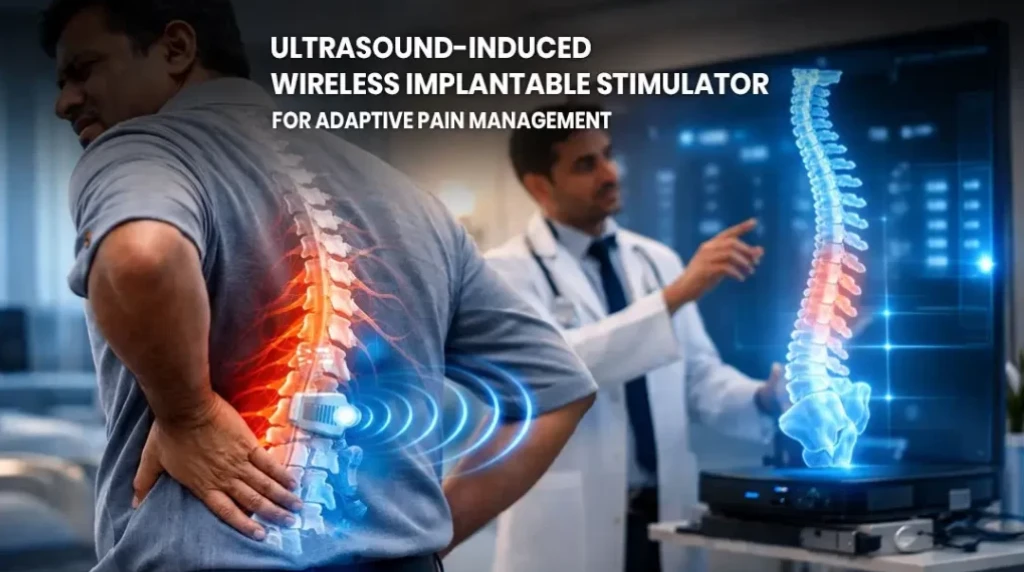
Enter the game-changer : USC’s Ultrasound-Induced Wireless Implantable (UIWI) Stimulator.
Spinal Cord Stimulator Advances: : How This Wireless Tech Works
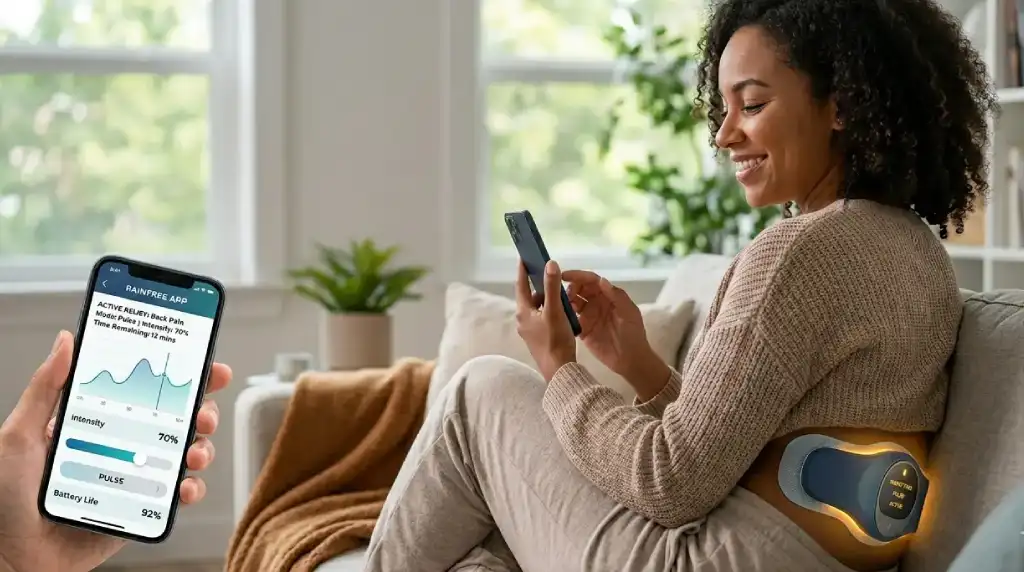
This isn’t your grandpa’s stimulator. It’s a tiny, bendy patch stuck to your spine, powered by ultrasound no batteries, no wires. Like wireless phone charging, but with safe sound waves (same as pregnancy scans) penetrating deep. Key spinal cord stimulator advances making it revolutionary:
- Pain Detection : Monitors brain waves (EEG) like a smartwatch tracks heart rate spots nerve pain spikes automatically.
- AI-Powered Personalization : Uses machine learning (95% accurate) to grade pain: mild (post-injury twinge), moderate (FBSS burning), or severe (accident-related shocks). Adjusts in real-time.
- Ultrasound Power Magic : Wearable patch sends waves; implant converts them to electricity via piezoelectric tech (PZT material—highly efficient).
- Spinal Signal Jam : Pulses rebalance “pain-on/off” nerves, blocking signals to the brain. Flexible design twists with you—no pain during namaskar or driving.
Lab tests on rodents zapped chronic neuropathic pain from pinpricks (like post-accident hypersensitivity) and heat (FBSS-like flares). Animals preferred the “pain-free zone” real proof!
Real-Life Wins: Nerve Pain After Injuries and Failed Surgeries
- Road accident survivor : Sharp sciatica after a Hyderabad traffic smash. Old SCS? Bulky battery swaps every 5 years. New wireless one? Constant relief, no ops.
- Sports injury warrior : Badminton player’s torn nerve from a smash—shooting leg pain. AI tweaks stimulation for activity spikes.
- FBSS patient : Back surgery failed; endless numbness. This neuromodulation marvel adapts to daily flares, ditching opioids.
For Indians, it’s perfect: tackles diabetes neuropathy too (affects 20% of Type 2 patients here). Why India Needs These Spinal Cord Stimulator Advances Now With 1 in 5 Indians in chronic pain (Indian Journal of Pain), wireless spinal cord stimulator tech could slash clinic visits. Less invasive (future syringe delivery?), smartphone control, and cheaper long-term.
Pioneered by Dr. Qifa Zhou (USC), published in Nature Electronics (June 2025). Human trials next—watch. Ready for nerve pain relief? Consult a specialist in neuromodulation today. This could be your turning point. Dr. Vijay Bandikatla, Pain Physician & Interventional Specialist
Fellowship in Neuromodulation (Guys’ & St. Thomas’ Hospital, London) Indo British Advanced Pain Clinic & Apollo Hospitals, Hyderabad Book Consultation | Follow for more on pain technologies.