



Chronic pain is often a physical manifestation of systemic inflammation. While modern medicine provides essential relief, your kitchen—particularly one stocked with traditional Indian staples—serves as a potent “farmacy” capable of modulating the body’s pain signals. This guide integrates global nutritional science with Indian dietary wisdom to help you manage pain through evidence-based eating.
1. The Bioactive Spice Cabinet
Spices are concentrated sources of phytochemicals that interact with pain pathways similarly to Non-Steroidal Anti-Inflammatory Drugs (NSAIDs).
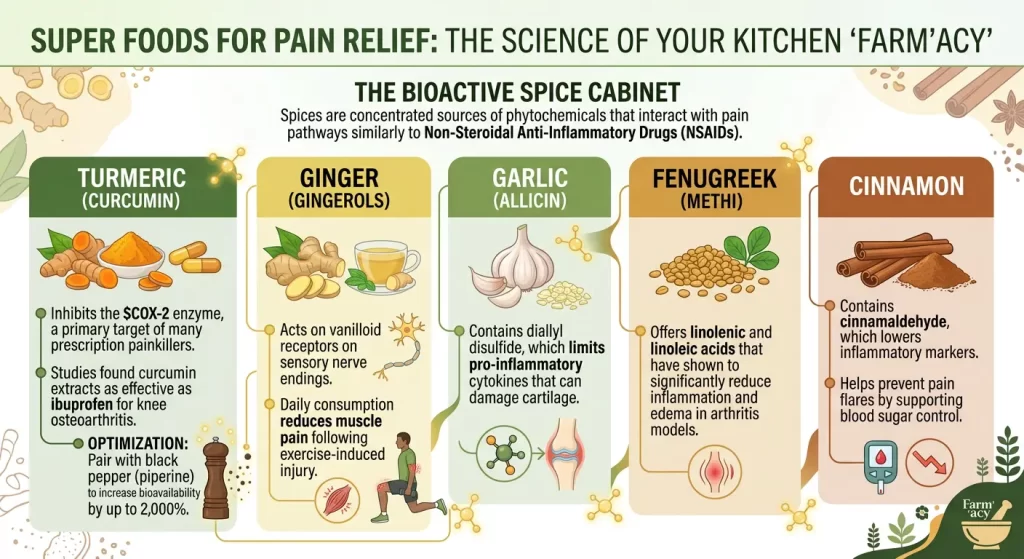
- Turmeric (Curcumin):Inhibits the COX-2 enzyme, a primary target of many prescription painkillers. Studies found curcumin extracts as effective as ibuprofen for knee osteoarthritis.
- Optimization: Pair with black pepper (piperine) to increase bioavailability by up to 2,000%.
- Ginger (Gingerols):Acts on vanilloid receptors on sensory nerve endings. Daily consumption reduces muscle pain following exercise-induced injury.
- Garlic (Allicin):Contains diallyl disulfide, which limits pro-inflammatory cytokines that can damage cartilage.
- Fenugreek (Methi):Offers linolenic and linoleic acids that have shown to significantly reduce inflammation and edema in arthritis models.
- Cinnamon: Contains cinnamaldehyde, which lowers inflammatory markers and helps prevent pain flares by supporting blood sugar control.
2. Omega-3s & "Smart" Fats
Inflammation is often driven by an imbalance of fatty acids. Increasing Omega-3 intake helps shift the body’s chemistry toward an anti-inflammatory state.
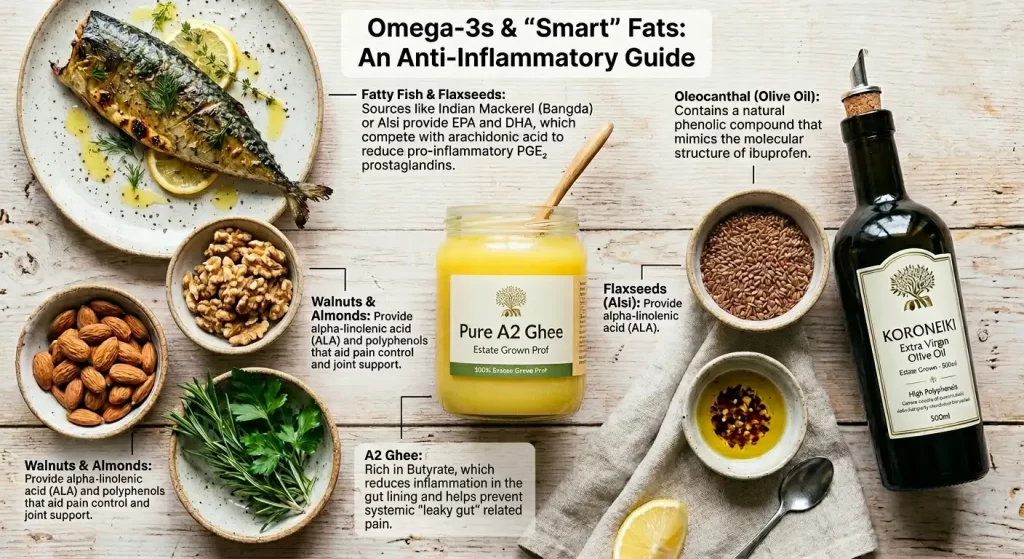
- A2 Ghee:Rich in Butyrate, which reduces inflammation in the gut lining and helps prevent systemic “leaky gut” related pain.
- Fatty Fish & Flaxseeds:Sources like Indian Mackerel (Bangda) or Alsi provide EPA and DHA, which compete with arachidonic acid to reduce pro-inflammatory PGE_2 prostaglandins.
- Walnuts & Almonds:Provide alpha-linolenic acid (ALA) and polyphenols that aid pain control and joint support.
- Oleocanthal (Olive Oil): Contains a natural phenolic compound that mimics the molecular structure of ibuprofen.
3. "Super-Greens," Fruits, and Magnesium-Rich Millets
Replacing refined carbohydrates prevents blood sugar spikes that trigger cytokine release.
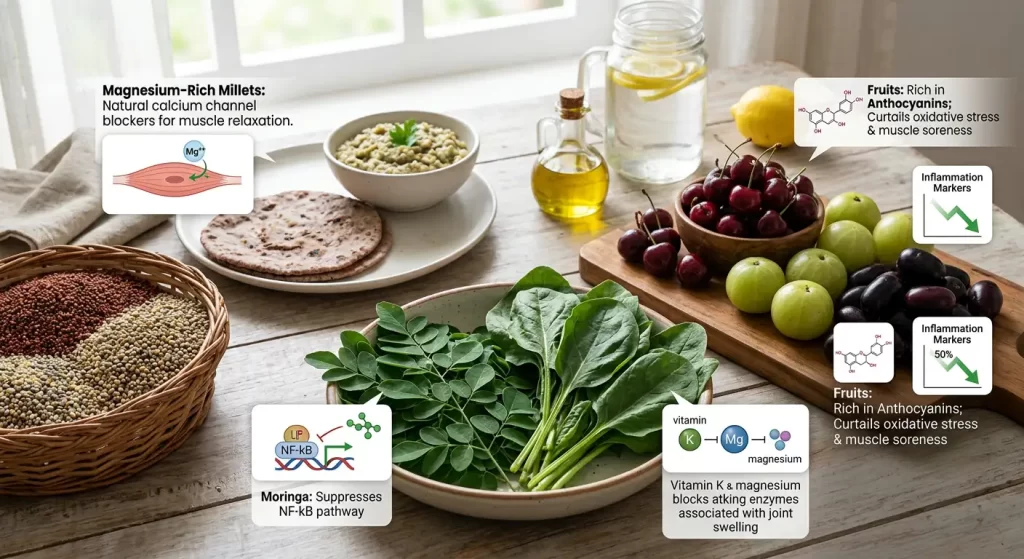
- Moringa (Sahjan):Rich in isothiocyanates that suppress the NF-\kappa B pathway, a central protein complex in the body’s inflammatory response.
- Spinach (Palak) & Amla:Spinach blocks enzymes causing joint swelling via vitamin K and magnesium, while Amla inhibits inflammation mediators through its exceptional antioxidant density.
- Tart Cherries & Jamun:Contain anthocyanins that curb oxidative stress and can decrease muscle soreness and inflammation markers by up to 50%. Jamun serves as a potent local alternative.
- Magnesium-Rich Millets: Ragi and Bajra provide magnesium, which acts as a natural calcium channel blocker to help muscles relax and prevent nervous system “wind-up”.
Updated "Pain-Relief" Protocol: Comparison Table
| Target Pain Type | Food Category | Best Indian Source | Key Compound |
|---|---|---|---|
| Arthritis, Muscle Soreness | Spices | Turmeric, Fresh Ginger, Cinnamon | Curcumin / Gingerol / Cinnamaldehyde |
| Joint Stiffness, Gut Pain | Healthy Fats | Flaxseeds, A2 Ghee, Walnuts | Omega-3 / Butyrate / ALA |
| Bone & Joint Health | Vegetables/Greens | Moringa, Spinach, Amla | Isothiocyanates / Antioxidants |
| Fibromyalgia, Nerve Pain | Grains/Nuts | Ragi, Bajra, Almonds | Magnesium |
| Muscle Recovery, Gout | Fruits | Tart Cherries, local Jamun | Anthocyanins |
| General Inflammation | Seeds/Spices | Fenugreek Seeds (Methi) | Linoleic Acid |
Frequently Asked Questions:
While they do not replace acute medical intervention, curcumin extracts from turmeric have been scientifically proven to be as effective as ibuprofen for knee osteoarthritis pain when taken consistently.
Unlike pharmaceutical pills that work in minutes, nutritional changes require accumulation. It typically takes 2 to 4 weeks of consistency to notice a reduction in chronic pain.
Seasonal Jamun (Neredu - Telugu) is a highly effective local alternative rich in anthocyanins, which help decrease inflammation and oxidative stress.
Yes, Ragi and Bajra are rich in magnesium, which acts as a natural calcium channel blocker to help muscles relax and prevent nervous system "wind-up" associated with chronic pain (like gabapentin).
You can incorporate fresh amla or amla powder in chutneys for a daily anti-inflammatory boost, ideally paired with spices like turmeric and pepper.